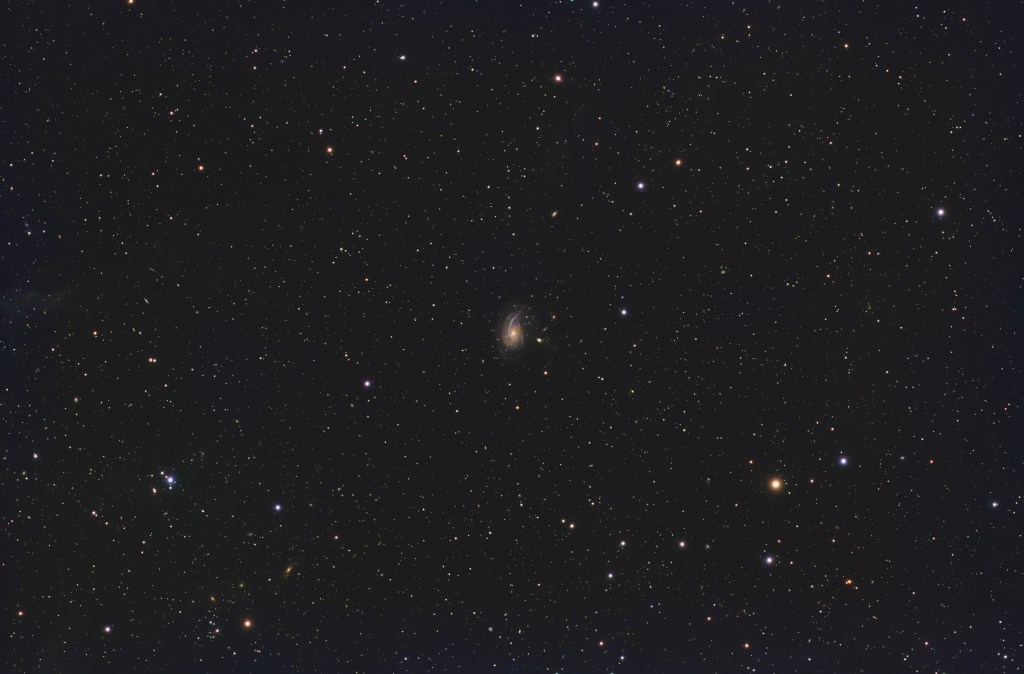
NGC 772 was interesting galaxy to photograph. What drew me to it was the unusual shape and the many other galaxies in the image. It was discovered by William Herschel in 1785. It is also listed in Arp’s Atlas of Peculiar Galaxies as Arp 78. It is an unbarred spiral galaxy, with one arm in particular being unusually large and prominent, likely caused by interaction with the nearby dwarf galaxy, designated NGC 770. It is a massive galaxy, at an estimated 204,000 light years across, and it is located approximately 106 million light years from earth.
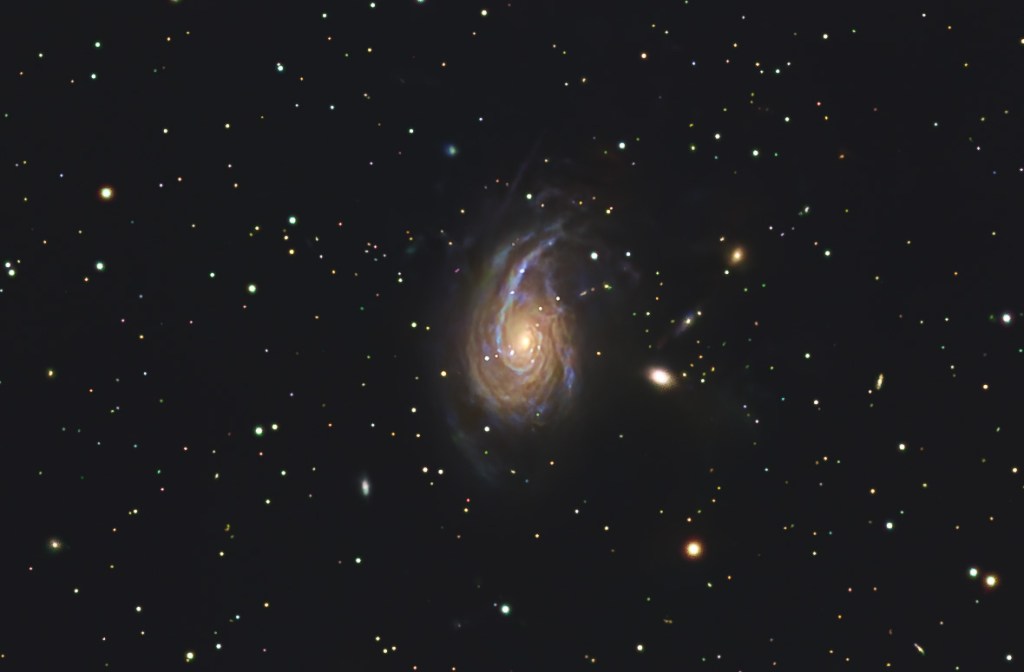
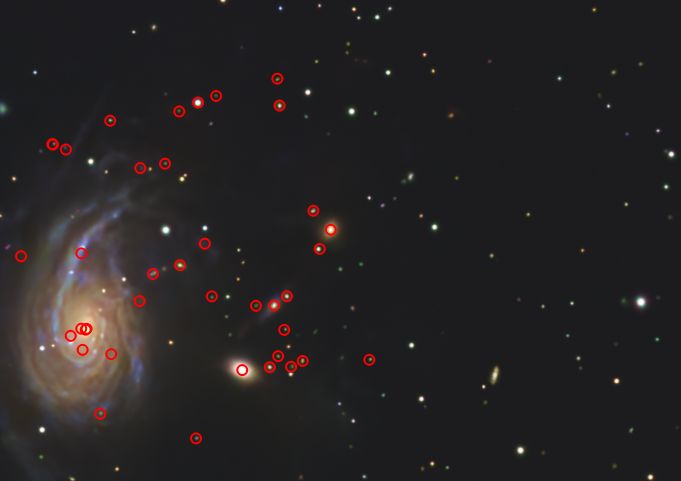
NGC 772 and NGC 770 have virtually identical redshift values, indicating that they are indeed located close to each other, and are indeed interacting. Some of the other galaxies apparently located in the vicinity are not true companion galaxies. Rick Johnson noted that there is inconsistency in the NED database, listing several of the apparently nearby galaxies as “possible dwarf galaxies”; however their redshift and apparent size would seem to rule that out. A quick check of the NED data indicates that this discrepancy still exists. I’ve annotated the area in the immediate vicinity(below), and it can be seen that many of the apparent stars are actually galaxies.
Data Collection and Processing
I captured this object in a single night, opting for to use my 600mm refractor to capture some of the wider field with a number of other galaxies. I processed this in PixInsight with my standard galaxy workflow, although I have been adding a final touch up phase in Photoshop with the Camera Raw Filter.
Technical Card
Mount: Celestron AVX
Camera(s): ZWO ASI 2600mc pro; ZWO ASI 120 mini guide camera
OTA: ZWO FF80
Guidescope: Williams Optics 50mm guidescope
Filters: None
Exposure: 82 Lights @ 180 seconds
Alternate Image
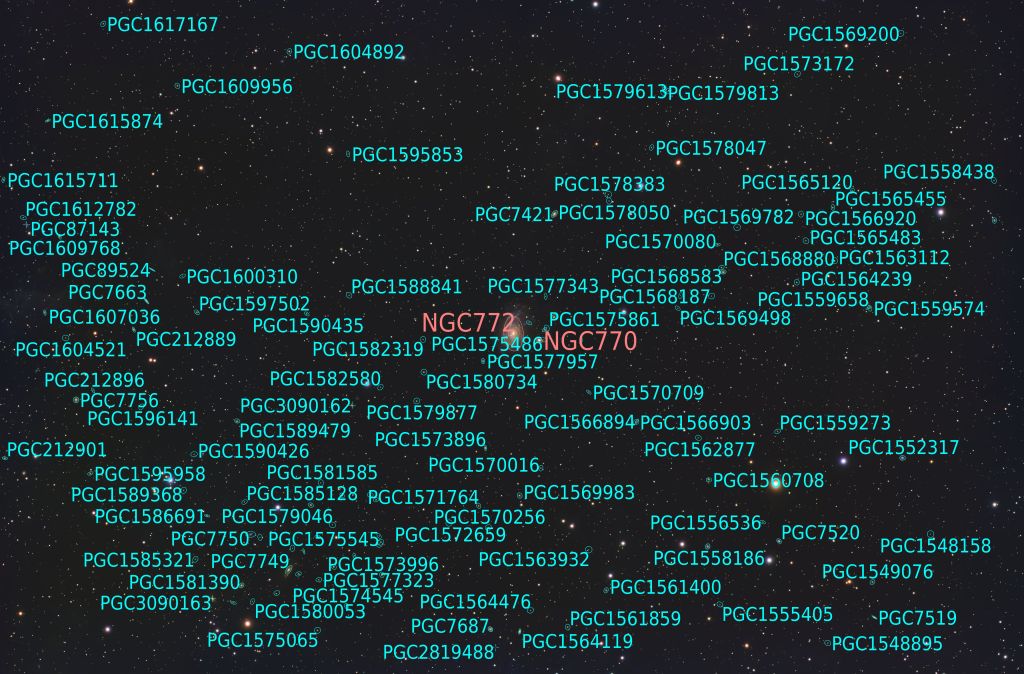
This is an area of the sky with a very large number of galaxies, those in the PGC catalogue are annotated below.


Leave a Reply