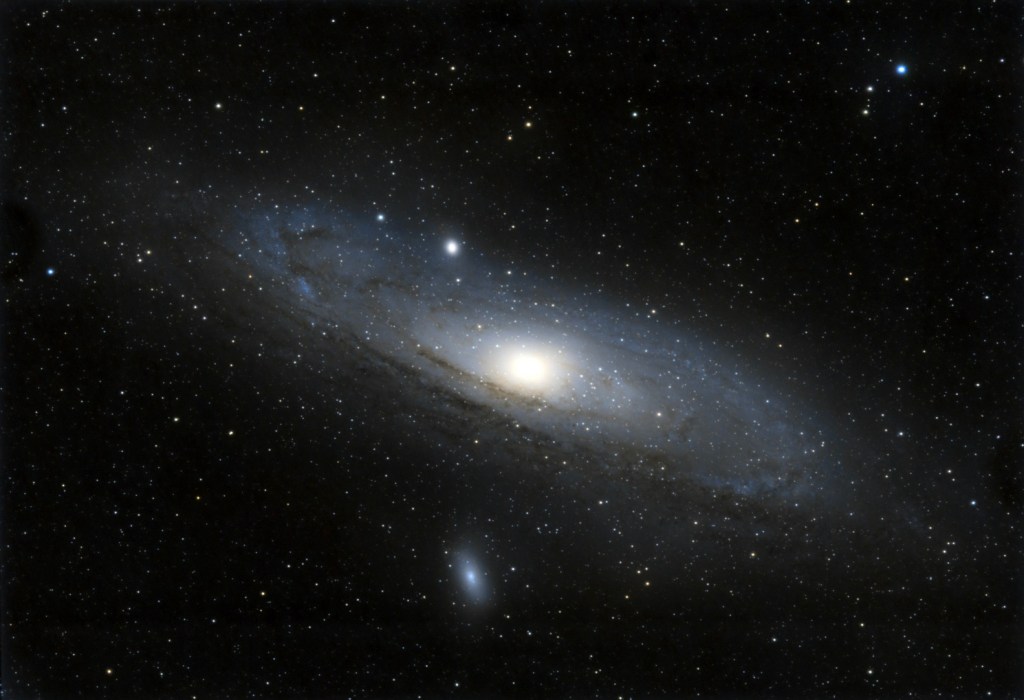

I got one night of solid imaging in over the weekend on M31. The results are looking promising, but I want to get at least one more night of data on it before I move on to something else. I’m going to quickly go over what went right, and what I want to work to improve for the next night.
First things first, exposure time. I was worried about overcooking the core of the galaxy, so I went with 120 seconds. Below is a screenshot of my N.I.N.A imaging tab after I started the sequence. It looks like a good choice. Also, this was the first night with my new ZWO autofocuser. I used a setting that I have used previously with the Celestron Electronic Focuser, to run an autofocus routine on an average HFR change of 7%. HFR, or Half Flux Radius, is a measure of the average star size. When this is minimized, the scope is at optimal focus. Unfortunately, this was way too tight, and the autofocus routine ran probably over 30 times during the session. Ideally, I’m looking to run it about 5 to 10 times.

Guiding was also problematic. One measure of “good” guiding is an RMS error of less than 0.5 pixels. In this case the error grew to nearly a full pixel. This is significantly less that I usually achieve on this setup. There are several potential sources of error here. First, I didn’t achieve as good of a polar alignment as I usually do. I typically get the polar alignment under 20″, this time I let stand at 1′. From research I have done, this error is unlikely to have caused issues, but I’ll do better next time.

A more likely source of error is that I increased my exposure time on the guide scope. There are some opinions that longer guide scope integration can mitigate the effects of unstable airmass. Others have are of the opinion that for guiding the faster the better. I had typically used 1 second guide frames in the past, but had wanted to experiment with different timing. So far it seems that 4 seconds didn’t work so well. I’ll probably try 0.5 seconds next. Despite the subpar guiding, the stars were nice and rounds, and the subs look good to stack.

Post Processing
I tried the background extraction and photometric color calibration in Siril, but wasn’t happy with the results of either. So I used GraXpert and manual color calibration. I did a fairly standard Starnet++ star removal, stretch, and recomposition. I’ll try to detail that process more thoroughly in a later post.
I’ve created a video that show what I just went over, link below. Clear skies everyone!
 Sweetman Astrophotography
Leave a comment